
Local Turkish olive cultivars
You cannot fully understand olive oil without understanding the cultivar behind it. This page gives a practical overview of the main Turkish varieties, where they belong, and why they matter.
Why it matters: cultivar is the genetic starting point of an olive oil. But the final result is shaped together with climate, soil, irrigation, harvest maturity, and processing.
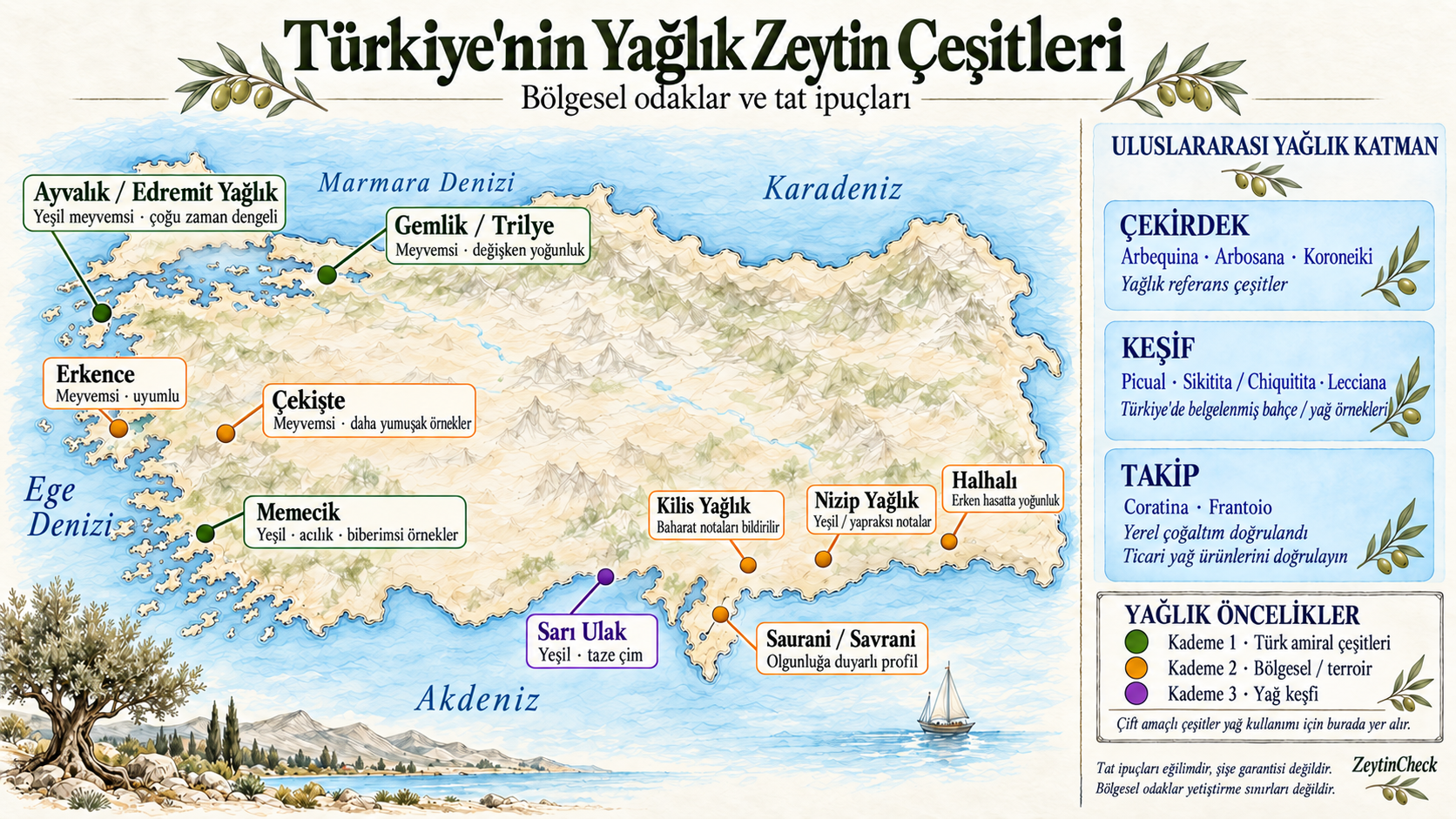
Main cultivars
Memecik
Region: Aydın, Muğla, south İzmir
Typical use: Mostly oil
Character: One of the strongest candidates for premium Turkish EVOO; robust, bitter-pungent and often associated with strong phenolic potential.
Ayvalık / Edremit Yağlık
Region: Balıkesir, Çanakkale, North Aegean
Typical use: Oil
Character: Elegant, aromatic and balanced; excellent for origin-driven storytelling.
Gemlik / Trilye
Region: Bursa, Yalova, Marmara
Typical use: Table + oil
Character: Commercially important and versatile; can also produce very good balanced oils.
Uslu
Region: Manisa, Akhisar
Typical use: Table + oil
Character: Early-ripening and typically milder, fruitier in style.
Domat
Region: Akhisar, Aegean
Typical use: Mainly table olives
Character: Large-fruited; usually less compelling if the goal is highly distinctive premium EVOO.
Erkence
Region: Urla, Karaburun
Typical use: Oil
Character: A more niche Aegean cultivar with a strong local identity.
Kilis Yağlık
Region: Kilis, Gaziantep
Typical use: Oil
Character: A distinctive southeastern cultivar with strong regional potential.
Nizip Yağlık
Region: Gaziantep, Nizip
Typical use: Oil
Character: Adapted to hot and dry conditions; strategically important in the Southeast.